Description
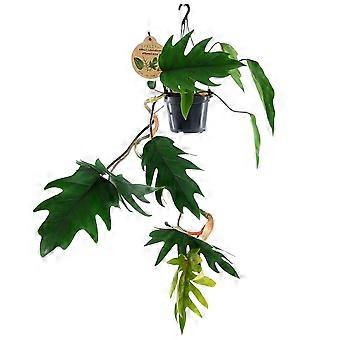
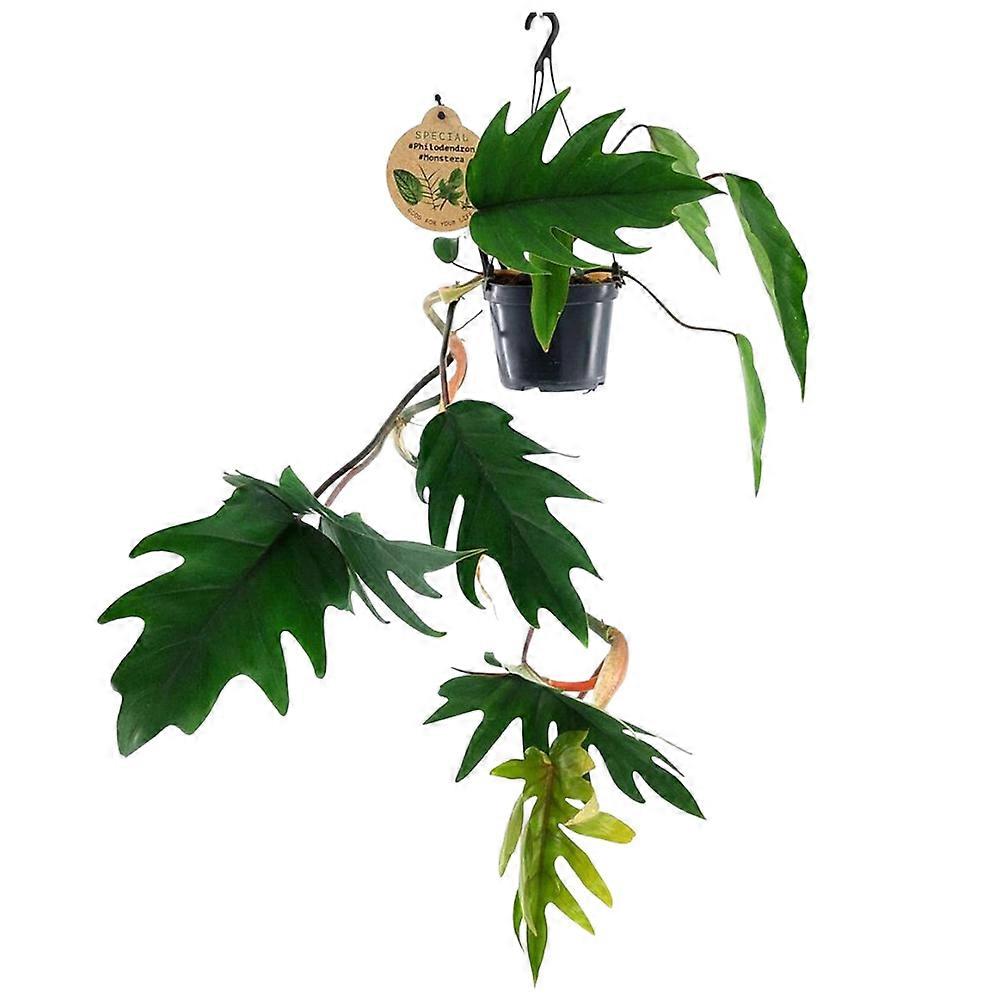
Philodendron mayoi Ø12cm
Philodendron mayoi - the slender elegance of Brazilian forests Philodendron mayoi is one of the most fascinating and sought-after Philodendrons, an authentic botanical species recently discovered in Brazilian tropical forests. Its deeply cut, elongated and slender leaves resemble the fine fingers of an open hand - almost palmate, with 4-5 main lobes that extend gracefully in a sculptural silhouette unique in the world of Philodendrons. Each leaf is an amazing architectural composition - the elongated lobes, of intense green with olive or bronze shades on the back, are connected by a strong central vein and fine lateral veins that trace almost graphic patterns. The leaf length can reach 30-50 centimeters in mature culture, making Philodendron mayoi a plant with an elegant but discreet presence. As a natural climbing plant, Philodendron mayoi extends its robust stems on vertical supports - moss poles, bark columns or trellises - developing over time an impressive specimen, with leaves that grow in size as the plant matures. It is a wonderful choice for anyone looking for a distinctive and rare Philodendron with the unmistakable silhouette of a palmate plant. Botanical origin and history Philodendron mayoi is a relatively recently discovered species, first scientifically described in 2000 by botanists Simon Mayo and M.L. Soares , for whom the species was named. The species is endemic to Brazil, in the humid tropical areas of the Amazon basin and the Atlantic Forest (Mata Atlântica), where it grows as a hemiepiphytic plant, beginning life at the base of trees and then climbing up the trunks. The Araceae family, to which the Philodendron genus belongs, comprises over 3,700 species distributed predominantly in tropical areas. The Philodendron genus includes approximately 500 species native to Central and South America, varied in form and habitat - from small epiphytic plants to giant lianas that climb dozens of meters up tropical forest trees. The name 'Philodendron' derives from ancient Greek - 'philo' (love) and 'dendron' (tree), referring to the natural habit of these plants to cling to tree trunks. In its natural habitat in Brazil, Philodendron mayoi grows in humid forests with atmospheric humidity above 75% and constant temperatures between 20-28°C, often in the lit shade of the canopy. The palmate foliage The foliage of Philodendron mayoi is its unique visual signature. The leaves are deeply cut, pinnate or palmate, with 4-5 main elongated lobes that extend from a strong central vein. Each lobe is thin and elegant, sometimes with a slight curve at the tip, and the entire leaf has a slightly leathery and glossy texture. The base color is intense green, usually darker on the upper side and lighter on the lower, sometimes with bronze or olive reflections. The petioles are long and slender, sometimes with slightly striped or spotted patterns, connecting the leaf to the central climbing stem. Young leaves appear wrapped in a cataphyll (protective sheath) that gradually detaches, revealing the new leaf with already defined lobes. As the plant matures and gains vertical support, new leaves become increasingly larger and more elegant, often doubling or tripling the size of juvenile leaves. The flowers Philodendron mayoi produces flowers typical of the Araceae family - a cylindrical spadix of small, green-yellow flowers, wrapped in a spathe (modified leaf) of cream-green or slightly violet color. Flowers appear very rarely in indoor culture, only on very mature plants and under optimal light and humidity conditions. For everyday growers, the absence of flowers is not a loss - the unique beauty of the palmate foliage completely compensates for this aspect. All the plant's energy is directed towards the development of increasingly impressive new leaves. In the wild, pollination is carried out by small specialized beetles (Scarabaeidae), and the resulting fruits are green berries that mature in a few months. This natural system does not reproduce in apartment culture, but is interesting for understanding the plant's biology. Growth habit and care Philodendron mayoi is an approachable plant that rewards a little attention, suitable for beginners and experienced plant lovers alike. Growth is moderate, with new leaves appearing every 3-4 weeks during the growing season. The plant is a hemiepiphytic climber, so it BENEFITS from a moss pole or bark column to develop its maximum potential. Essential requirements: Light: medium to bright indirect light. East or south-east facing windowsill is ideal. Avoid intense direct sun which burns the leaves. Sufficient light is essential for developing large leaves. Temperature: 18-28°C optimal; does not tolerate below 13°C. Protect from cold drafts in winter. Watering: moderate - when the top 3-4 cm of substrate has dried. Every 7-10 days in summer, every 10-14 days in winter. Water abundantly, remove water from saucer. Humidity: 60-80% ideal - humidifier or regular misting of leav
-
Fruugo ID:
515159577-1050958811
-
EAN:
4001299401192
Product Safety Information
Please see the product safety information specific to this product outlined below
The following information is provided by the independent third-party retailer selling this product.
Safety Warnings:
-
Philodendron mayoi is a climbing philodendron with thin, deeply lobed, finger-like leaves in a glossy, intense green.
-
Potential risks
-
Toxicity: Contains calcium oxalate in leaves and stems, toxic to humans and pets if ingested, with the sap causing skin irritation.
-
Child and pet safety: The unusual leaf shape may attract playful cats; chewing causes oral irritation and excessive drooling.
-
Handling: Wear gloves when trimming the long vines and avoid touching your eyes after contact with the sap.
-
Precautions
-
Mount the plant on a hanging support, out of reach of pets.
-
Clean any surfaces that come into contact with dripped sap.